
The Bloom Boom — When Spring Turns Into Sweet Magic
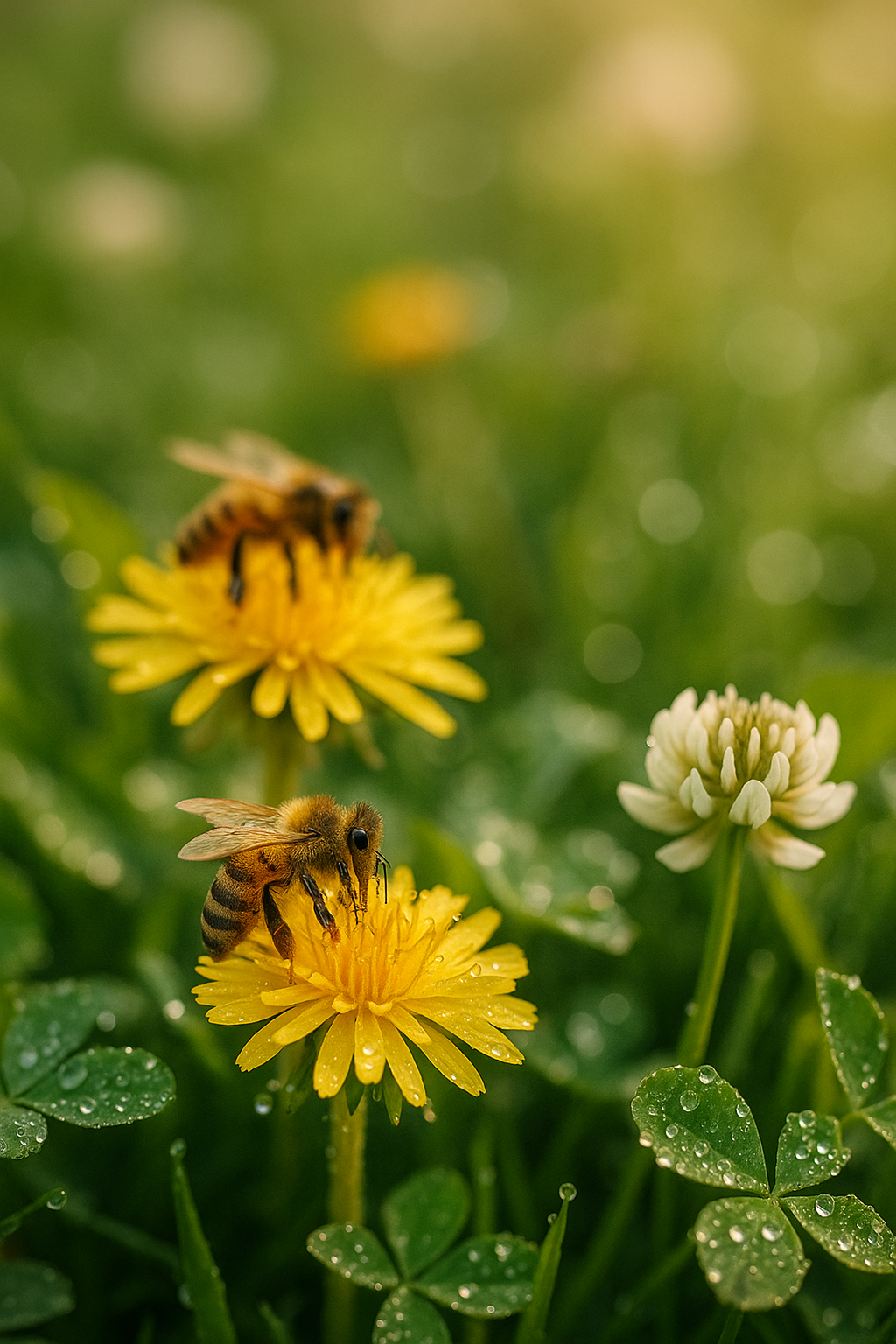
Bees foraging after a rain
Spring didn’t tiptoe this year — it burst onto the scene. One moment the yard was winter-brown and sleepy, and the next it was sprinkled with dandelions waving tiny yellow flags at the bees like, “Alright ladies… breakfast is served.”
By mid-May, the girls were zooming in every direction. Apple blossoms, clover fields, wild violets, backyard herbs — anything with color or scent was fair game. The whole landscape felt like it flipped into a bright, buzzing buffet overnight.
This is also the time of year when I officially become a professional Bee Dodger. I’ll be trying to add supers or adjust frames, and the foragers form a miniature airport around me — zipping past my head with the kind of determined energy that says, “Excuse you, human, we are WORKING.”
But Spring Wasn’t Just Blooms… It Was Rain, Too
This spring also brought a whole lot of water.
April and May alone delivered 20.86 inches of rainfall, and while rain is good for flowers and nectar… it can make beekeepers a little twitchy.
Here’s why:
🐝 Rain Means Bees Stay Home
Bees don’t forage well in heavy rain. They’re tiny, and wet wings don’t fly. When we get long rainy stretches, the foragers are basically grounded.
No flights → no nectar → no pollen coming in.
🌸 Rain Can Delay or Dilute Blooms
Too much rain can slow down flowering or wash nectar out of blossoms. So even when everything looks green and thriving, the nectar flow may not be as strong as it seems.
🍯 Rain Can Create “Food Anxiety”
After winter, colonies are already using up stored honey just to survive. If spring is soggy and cold, they burn through what they have faster, and it can leave them running low before the big nectar flow really kicks in.
And beekeeper brain goes straight to:
“Okay… do you need feeding? Are you okay? Should I worry? Am I worrying too much? (Yes.)”
The Good News
The bees handled it like they always do — with teamwork and quiet determination.
When the sun popped out between rainy spells, they worked overtime. I swear they were making up for lost hours the way humans do before a deadline. And once the weather steadied, it felt like the hives collectively said, “Alright, let’s GO.”
That’s the part I love most:
even in a weird, soggy spring, the bees adapt.
They don’t completely panic.
They adjust, communicate, and keep moving.
Meanwhile, I’m standing there in my suit like a concerned stage manager, muttering:
“Everybody good? We good? Okay. Just checking.”
Spring honey always feels like a blessing — a reward we didn’t earn but gratefully receive.
And this year, with all that rain, it felt even more meaningful to watch the hives come through strong.
Because spring is a reminder:
even when conditions aren’t perfect, life finds a way to bloom anyway.
